

Search
What is a tourbillon and what are its types?
Various
What is a tourbillon and what are its types?

While watches may seem like simple devices, they are actually quite complex. From the mechanisms and complications to the various structural parts, each model is unique. In this article, we'll hone in on one particular term that may seem mysterious: a tourbillon. What is a tourbillon and how does it work? Where did it originate from and are there any related designs? Keep on reading to find out!
Table of contents:
Tourbillon – what is it?
The term "tourbillon" is derived from the French word for "whirlwind". It refers to a unique design element that is a crucial part of a mechanical mechanism of the watch. This design features a rotating cage, resembling a basket, which houses the balance wheel and escapement. A tourbillon typically makes a full rotation every 60 seconds.

The purpose of the tourbillon is to improve the accuracy of a watch by compensating for the effects of gravity on the balance wheel. The tourbillon is considered a prestige complication in watchmaking due to its complexity and the level of skill required to manufacture it. Watch manufacturers usually leave the tourbillon exposed and prominently displayed on a watch’s face to highlight the marvel and complexity of its design. As a result, it’s often found in high-end watches produced by luxury brands.
How does a tourbillon work?
All timepieces, no matter how well-made, are susceptible to timing deviations due to factors such as magnetic fields, temperature changes and the force of gravity. To counteract this, Abraham-Louis Breguet patented a "tourbillon regulator", which is still used in watches today. As a result, this innovation significantly improved the precision of mechanical watches.
As we previously mentioned, the goal of a tourbillon is eliminating errors of poise in the balance giving a uniform weight. Its operation involves the precise balancing of the watch's balance to achieve an even rotation around its axis of gravity. However, accomplishing this level of precision was not feasible with a standard movement alone. Thus, the tourbillon was designed as a specialised device to make it possible.

The tourbillon is based on a special design, a cage that is constantly in motion, rotating 360 degrees. A rotating cage in a tourbillon holds specific parts of a watch's internal mechanics, namely the balance wheel and escapement. The escapement is a movement component consisting of the hairspring, balance wheel, and pallet fork. By slowly rotating the cage, typically at a rate of 1 revolution per minute, the tourbillon compensates for the negative impact of gravity in certain watch positions and corrects any positional accuracy errors. In essence, the tourbillon is a mechanism that mitigates the effects of gravity and enhances the precision of timekeeping.
History of the tourbillon
The origin of the tourbillon dates back to the late 18th century when renowned watchmaker Abraham-Louis Breguet set out to counteract the adverse impact of gravity on pocket watch timing precision. It took several years of development for Breguet to create the new invention that would eliminate poise errors in the watch's components, namely the balance wheel and escapement. The work on the tourbillon began around 1791 and represented a significant breakthrough in horology that would have a lasting impact on watchmaking for generations to come.
This led to the creation of a unique regulator, which was patented by the French watchmaker. The original patent application was filed in 1800, and just a year later, on June 26, 1801, the first-ever patented Breguet tourbillon pocket watch, No. 1176, was approved. As a result, Breguet was granted the patent rights for the innovative "Tourbillon" regulator for a period of 10 years. This marked a significant milestone in watchmaking history and cemented the tourbillon's reputation as a revolutionary mechanism that greatly enhanced timekeeping accuracy.

Abraham-Louis Breguet constructed around 30 more tourbillon watches until his passing in 1823, but only a maximum of 20 have survived to this day. It wasn’t until 1806 that Breguet's invention was first publicly displayed at the National Exhibition of the Products of Industry in Paris, held at the Esplanade des Invalides.
It's interesting to note that the tourbillon was initially created for pocket watches and then adapted for use in table clocks. It wasn't until the mid-20th century that this mechanism was introduced in wristwatches. In fact, Omega was the first to produce a wristwatch with a tourbillon in 1947. Nearly 40 years later, Audemars Piguet introduced the Calibre 2870, which was the world's first automatic tourbillon wristwatch.
Mechanical complications similar to the tourbillon
For years, watchmakers were hesitant to experiment with creating their own designs for the classic tourbillon mechanism. In fact, producing a mechanical tourbillon watch was a daunting challenge for many manufacturers. Nonetheless, it's worth noting that over time, similar mechanisms with constructions and operating principles akin to the Breguet tourbillon have been developed intermittently. So, what are these derivative designs?
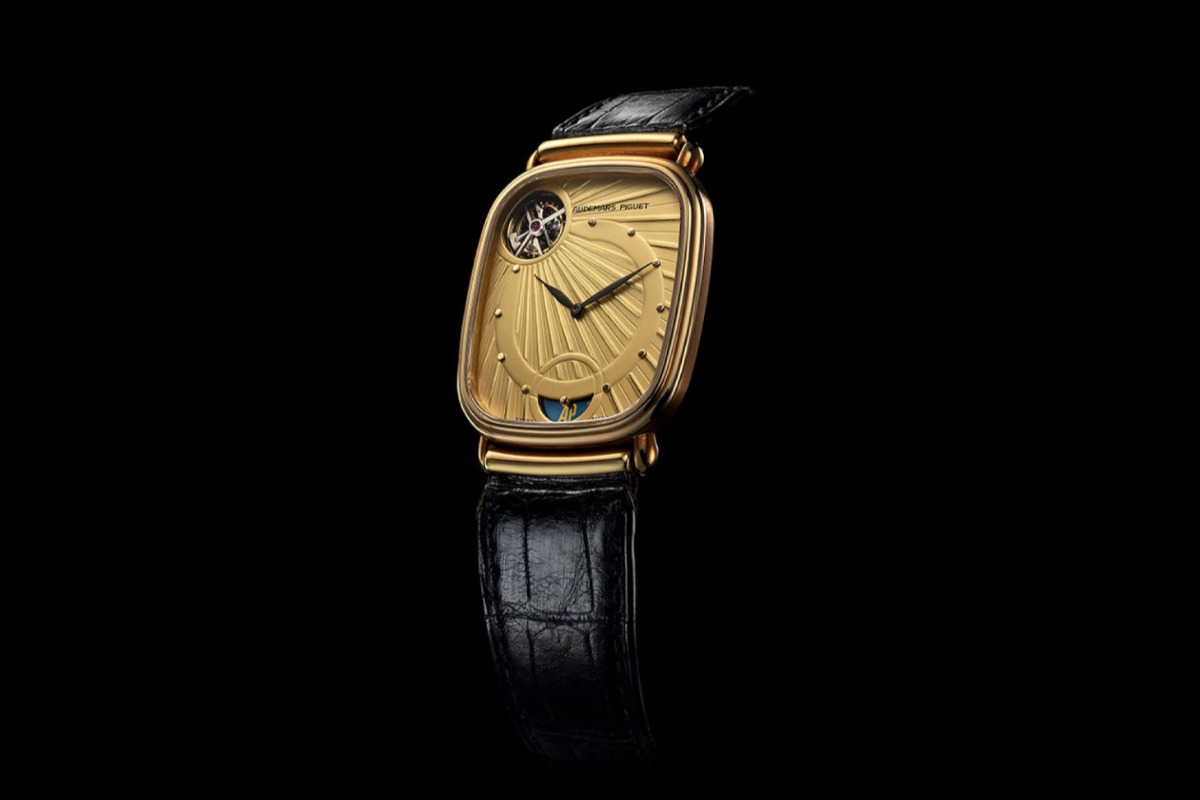
As previously mentioned, the most common and fundamental version of the tourbillon is the 60-second tourbillon. This type of tourbillon features a rotating cage, supported on a bridge, that is typically displayed at the 6 o'clock position on the watch dial. The cage takes one full rotation around its axis every minute, thereby serving as a second counter, such as for a small second display.
Flying tourbillon
The flying tourbillon is an enhanced version of the standard tourbillon mechanism. It was initially patented by Robert Benson North in 1904 and later designed by German watchmaker Alfred Helwig in 1920. While it functions similarly to the previous version, the flying tourbillon boasts a different construction. In this design, the bridge is removed, and an additional fourth wheel is placed beneath the balance wheel with an escapement.
Gyrotourbillon
The flying gyrotourbillon is yet another derivative design of the classic tourbillon. It is a two-axis rotating escapement mechanism that was first developed by German watchmaker Thomas Prescher in 2003. The design of the gyrotourbillon was inspired by the biaxial tourbillon, which was invented by Anthony Randall in 1977. Unlike the biaxial tourbillon, however, the gyrotourbillon consists of two separate cages that rotate at right angles to each other.

Carrousel
The final type worth mentioning is the carrousel. This mechanism is also designed to counteract the negative effects of gravity and increase precision in timekeeping, similar to the tourbillon. The carrousel escapement was invented by Bahne Bonniksen, a Danish watchmaker who patented his creation in 1892. However, unlike the classic tourbillon, the carrousel features a rotating escapement without a fixed wheel.
The cage of the carrousel mechanism is mounted on a rotating carrousel wheel, which is driven by an intermediate wheel. The cage rotates independently of the axis of the fourth wheel and it takes one hour to complete a full revolution. Although originally only used in pocket watches, the carrousel escapement gained popularity in wristwatches in the early 21st century. Blancpain, a Swiss watch company, perfected the design and incorporated it into their wristwatches.
New! A watch with tourbillon from Swiss brand Frederique Constant
The tourbillon has played a significant role in the development of watchmaking and has secured its place in the history of the industry. It is a mechanism that is exclusively used by luxury watch brands to showcase their exceptional watchmaking skills. Watches equipped with a tourbillon are highly valued and sought after in the industry due to their prestige and exquisite design.

If you're captivated by the precision of the tourbillon, you can now get one. Our shop offers a Swiss men's Frederique Constant Classic Tourbillon Manufacture FC-980G3H9 watch. Check it out now!





Sign in
I'm new here
Why is it worth having an account?
Create an account
Why is it worth having an account?
The administrator of your personal data is the owner of the Watchard store, i.e. 57 Concepts Sp. z o.o. Sp. k. with the registered office at al. Witosa 31, lok. 115, 00-710 Warsaw, Poland. Providing personal data by the Customer is voluntary but necessary to complete the purchase. You have the right to view your personal data we have processed, as well as the right to request changes or removal of your personal data. Personal data will be processed for a period of 10 years.
Forgot Password