

Search
The markings on the watch envelope under a magnifying glass. How do you read them?
Guides
The markings on the watch envelope under a magnifying glass. How do you read them?

At first glance, the watch's case appears to be a simple design element - it protects the movement and gives the model a certain character. But take a closer look and you will notice a number of small markings: abbreviations, symbols, reference numbers or technical information. For many people, these are just details that are easy to overlook. In practice, however, they are the ones that tell you the most about a watch's specifications, its origin, the materials used or its water resistance class.
In this post, we will look at the most common markings on the envelope and explain how to interpret them correctly. This will make it easier to consciously compare models, understand their parameters and avoid confusion when choosing a watch.
Table of contents:
Where to look for the markings on a watch?
Before going into specific symbols and abbreviations, it is worth sorting out one point. The markings on a watch are not just found in one place. Some are placed directly on the envelope, others on the caseback and still others on the dial itself. Each of these spaces has a slightly different informative function.
On the outer part of the envelope, there are often markings related to water resistance or material. this in turn is the place for the reference number, serial number and technical information. The dial most often contains data on the mechanism or the country of manufacture.
Therefore, we will divide this entry into several sections - we will look separately at the markings on the envelope, the caseback and the dial. This will make it easier to understand what the manufacturer wants to tell us and where to look for specific information.

Dial markings - what to look for?
The dial is the element we look at most often - it builds the character of the watch and is responsible for the legibility of the indications. This is why manufacturers place basic but essential information on it. They are usually discreet and integrated into the design, but carry a specific meaning.
On the dial, you will most often find the brand name, logo, indication of the type of movement (e.g. Automatic, Quartz), as well as information about the country of manufacture, such as "Swiss Made". On sports models, there may also be additional markings related to certifications or special functions.
In this section, we take a closer look at these symbols and explain what exactly they mean and how to interpret them when choosing a watch.
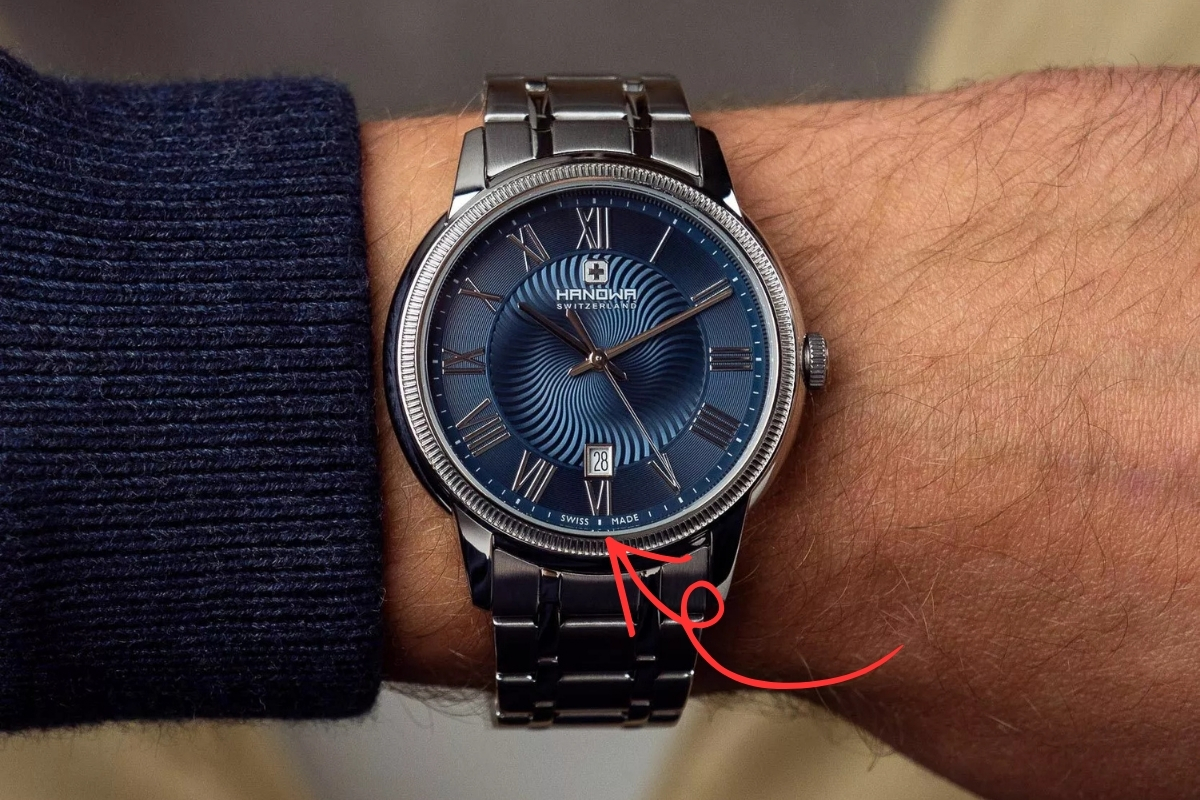
"Swiss Made" - what does this indication mean?
What does the "Swiss Made" inscription, often placed at the bottom of the dial, mean in practice? It is one of the most recognisable designations in the watch industry, but at the same time one that is sometimes misinterpreted.
The "Swiss Made" inscription is not just a stylistic element. It is a legally protected designation that can only be used if the watch meets certain requirements. In practice, this means that the movement is Swiss-made, the watch itself was assembled in Switzerland, and the final quality control also took place in that country. In addition, a certain percentage of the production costs must come from Switzerland.
For the wearer, this sends a clear signal about the origin of the design and production standards. The placement of the inscription on the dial - in a prominent position - emphasises that the manufacturer wants to highlight this information as one of the key elements of the model specification.
Movement markings
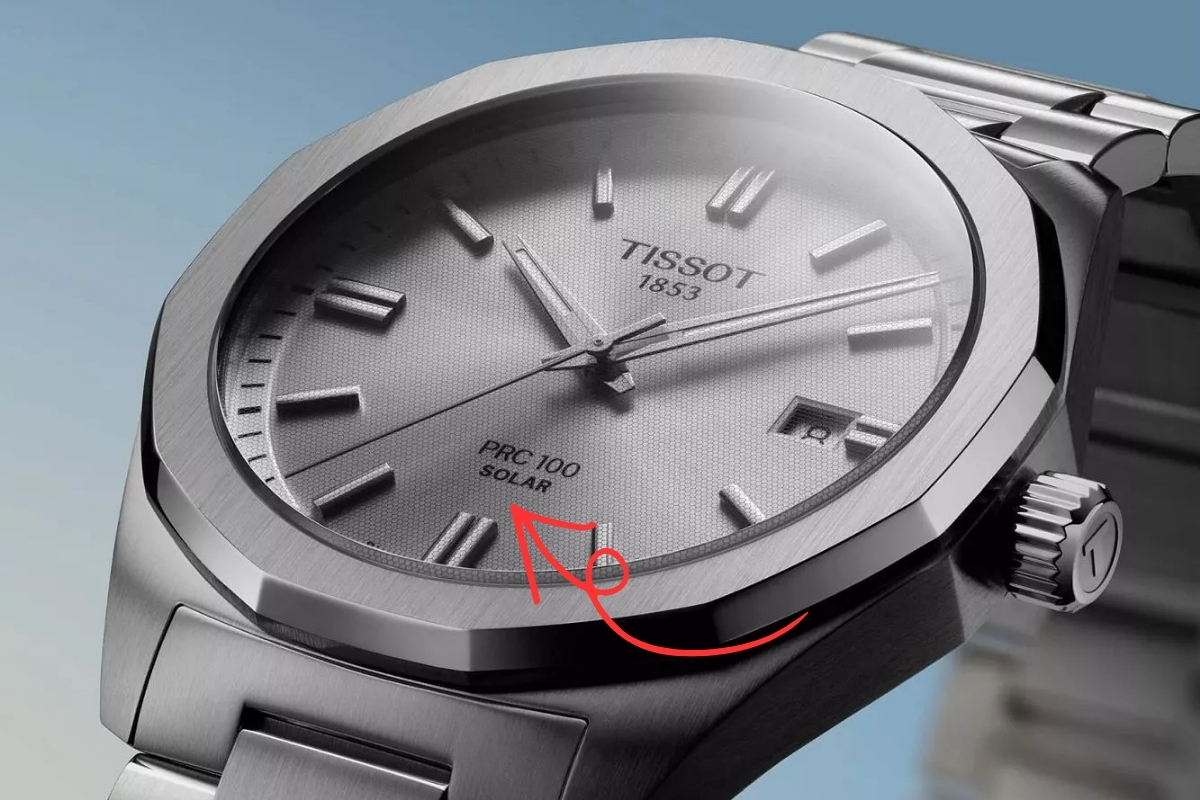
On the dial of many watches, you will find information about the type of movement used. This is one of the key markings, as it immediately indicates how the watch works and where it gets its energy to work from. Manufacturers use short, understandable terms that have become an industry standard.
The most common inscription, ‘Automatic,’ refers to a mechanical movement with automatic spring winding that utilises wrist movement. ‘Mechanical’ or ‘Hand-Winding’ indicates a hand-wound design. ‘Quartz’ indicates a battery-powered mechanism regulated by the vibrations of a quartz crystal. Some models also feature markings such as “Solar”, ‘Eco-Drive’ or ‘Kinetic’, which refer to alternative power sources – most often light energy or energy generated by hand movement.
Although these are small inscriptions, to the wearer they provide clear information about the design of the watch and allow the wearer to quickly distinguish between a mechanical and a quartz model, without looking at the detailed technical specifications.
Brand name and logo
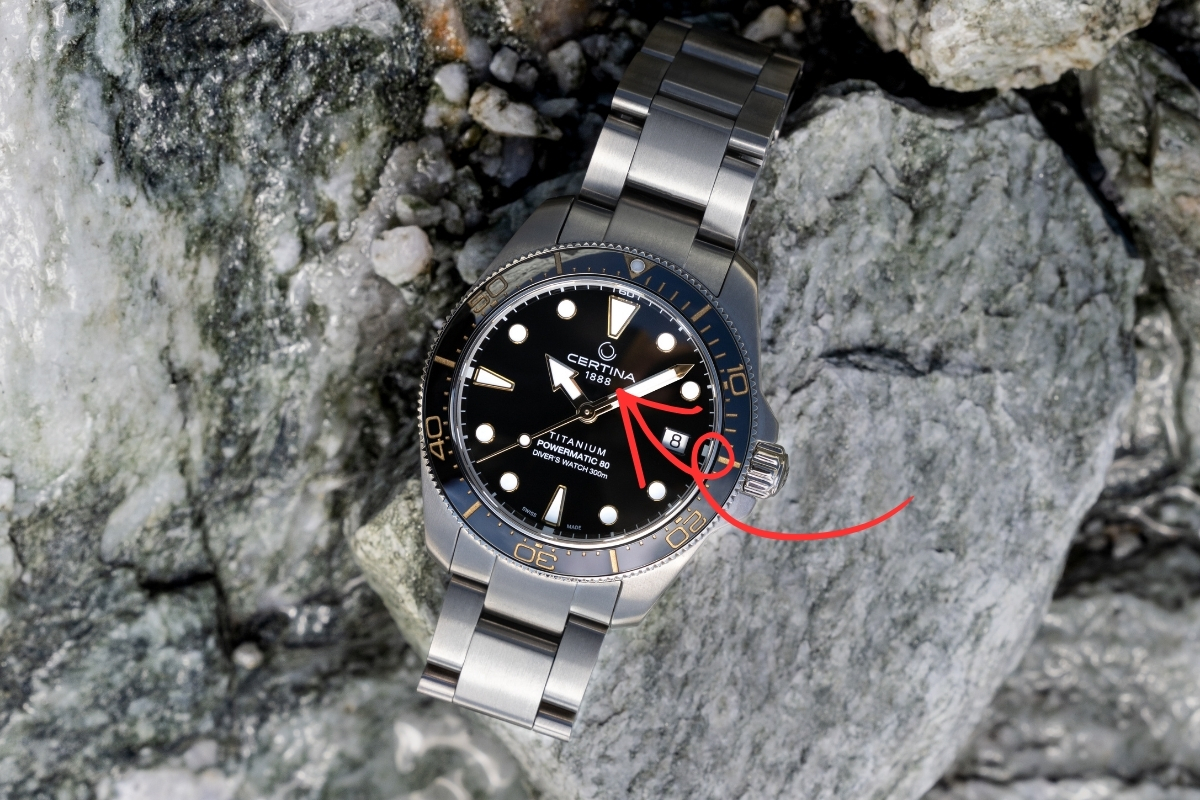
One of the most obvious markings on the dial is the manufacturer's name and its logo. Although for many people this is primarily an element of visual identity, in practice it is much more significant. It is the brand that is responsible for the design, construction, choice of mechanism, quality control and positioning of the watch in a specific market segment.
The logo on the dial acts as a confirmation of the authenticity of the model. In the case of reputable manufacturers, its shape, proportions and printing method are strictly defined. Higher-end watches often use an applied, superimposed logo instead of an overprint, which affects the visual perception of the dial, but above all demonstrates attention to construction detail.
It is also worth noting the additional markings accompanying the brand name - sometimes there is information about the year of the company's foundation, place of origin or product line. These are subtle elements that build context and help us better understand what brand we are dealing with.
Type of glass
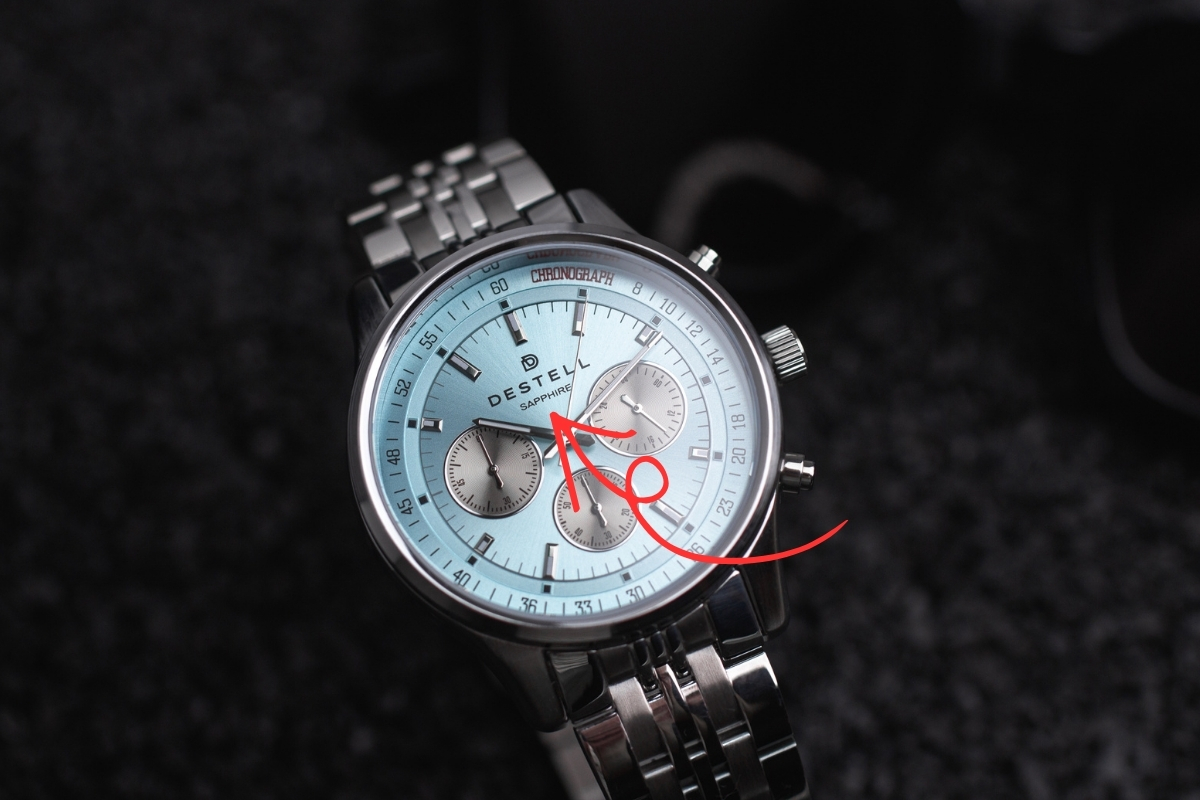
Information about the type of glass is not always in the same place. Manufacturers place it both on the dial and on the lid of the envelope - sometimes it appears in both spaces. The most common types of glass are and .
In practice, the higher grade glass, sapphire, is most often displayed directly on the dial. The inscription "Sapphire" then acts as a clear indication of the use of a more advanced material to protect the dial. It is much rarer to find a mineral glass indication on the front of the watch. If non-sapphire glass is used, this information is more likely to appear on the caseback.
Placing the marking on the caseback does not affect the appearance of the watch, but allows you to quickly check which material has been used. When comparing models, this is one of the basic parameters to pay attention to.
Water resistance
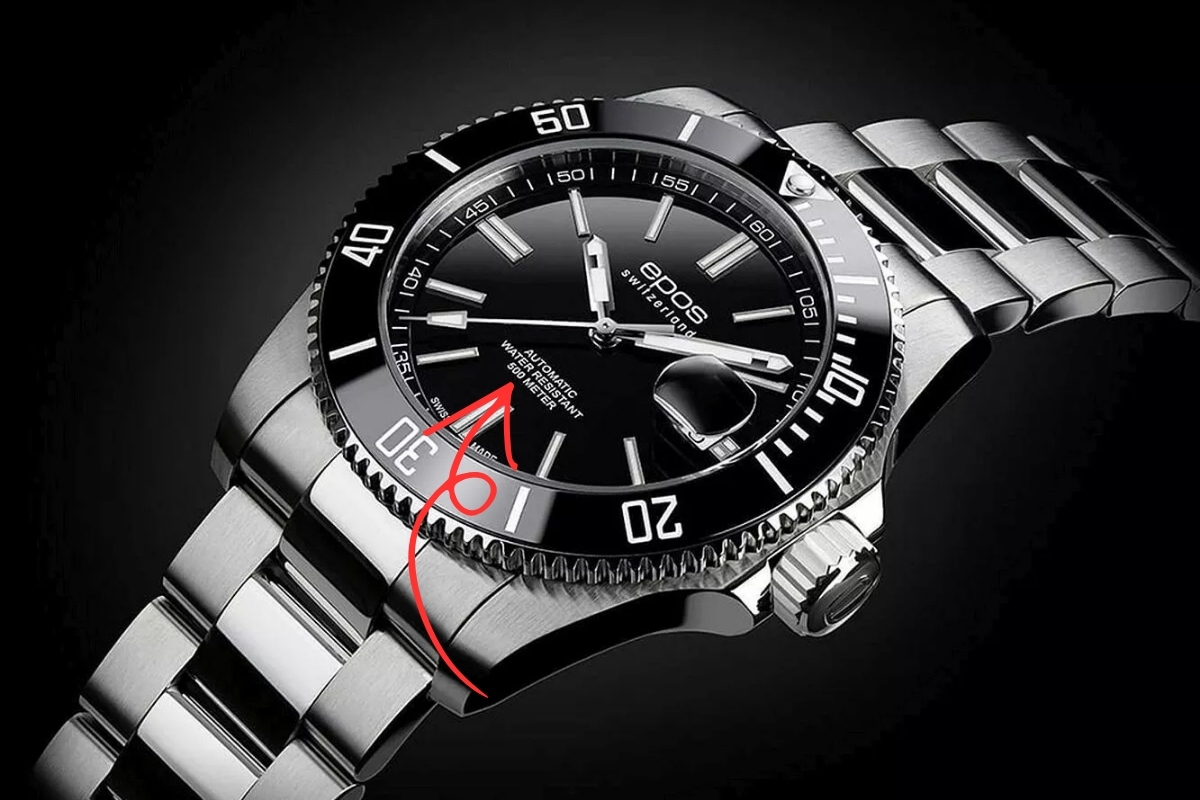
Information on water resistance may appear both on the dial and on the caseback. On sports models, it is sometimes displayed on the front of the watch, while on many other designs it can only be found on the caseback. The most common notations are "WR", "ATM", "BAR" or the indication in metres ("M"). All refer to the resistance of the watch to a certain water pressure.
It is worth emphasising that the values given do not indicate the actual depth to which the watch can be descended, but the level of pressure it has undergone in laboratory tests. Therefore, the correct interpretation of these symbols is of practical importance. They are what indicate whether a model is only suitable for everyday use and basic water contact, or whether it has been designed for swimming activities or more demanding conditions.
Designations of additional special functions
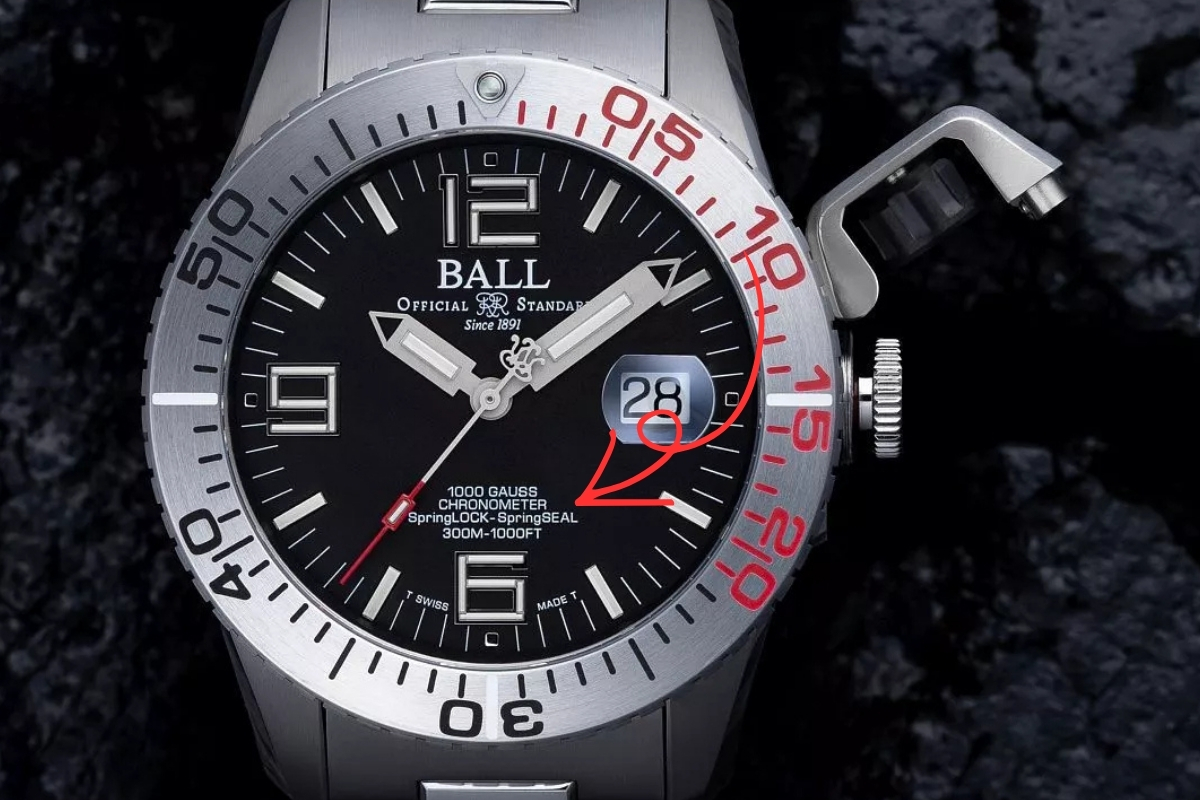
On the dial or the caseback of a watch, it is sometimes possible to find indications referring to specific design solutions beyond the basic specification. These are inscriptions indicating additional technical functions that the manufacturer has deemed important from the user's point of view.
These may be terms related to the certification of the mechanism, increased resistance to certain external factors or the use of special safety systems. An example of such a designation is "", which refers to the spring-loaded locking system used in selected designs. Depending on the model, it may refer to the protection of elements of the case or mechanism.
These types of markings do not appear on every watch. However, if they are visible, it means that the feature is an important design element and has been clearly distinguished by the manufacturer as part of the model's characteristics.
Markings on the dial - what does the back of the envelope say?
If the dial conveys basic information that is visible at first glance, the case back acts as a more technical showcase for the watch. It is there that manufacturers most often include details of construction, identification numbers or performance characteristics.
You will find, among other things, the reference number, serial number, water resistance level, information on the material of the envelope, type of glass or country of manufacture. Some models also feature standards designations, certification symbols or information on the technology used.
Although the caseback is not a visible element during everyday wear, it is the caseback that contains the most specific and precise data. For those who want to check the specifications of a watch in detail or verify its authenticity, it is one of the most important places to look.
Model number (reference number)
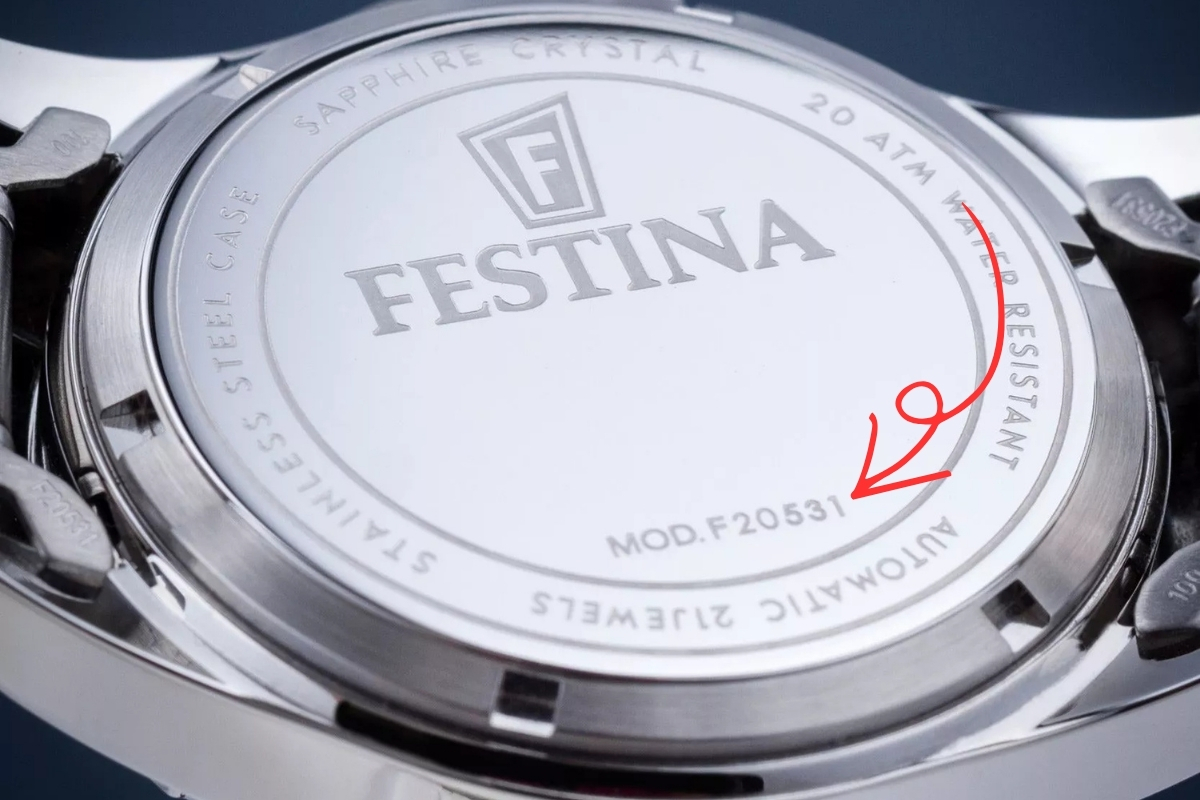
One of the basic markings placed on the caseback is the model number, also known as the reference number. This is a unique designation assigned to a specific version of a watch - including not only the name of the collection, but also the colour variant, the type of strap or bracelet or other construction details.
The reference number uniquely identifies the model in the manufacturer's range. Two visually similar versions may differ just by this designation, if they use a different mechanism, a different dial colour or a different envelope finish.
In practice, it is the model number that is the most important point of reference when searching for a watch in a shop, checking technical specifications or requesting a model for service. It is therefore useful to know where to look for it and how to read it.
Case material - what is the watch made of?
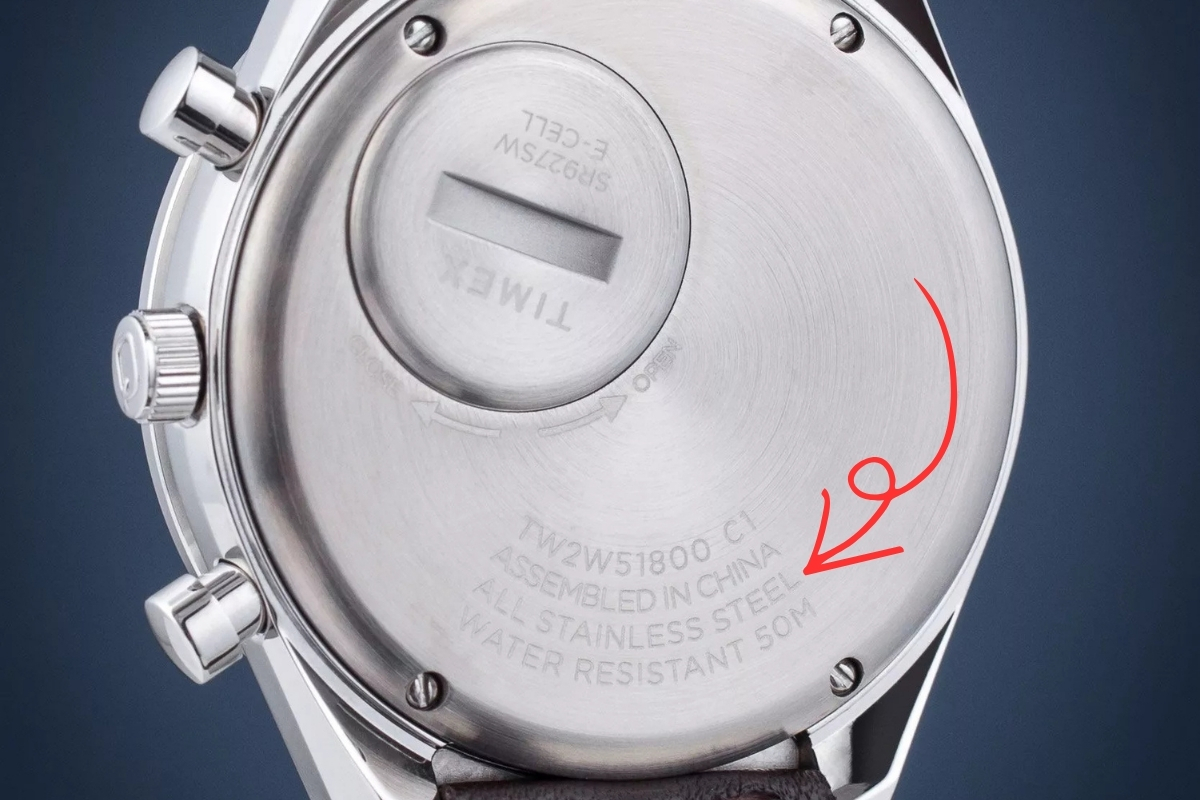
The case back often contains information about the material from which the case is made. This marking is technical in nature and allows you to quickly check what raw material the watch is made of. The most common inscriptions are ‘Stainless Steel’, ‘316L’, ‘Titanium’ or ‘Ceramic’.
The term "Stainless Steel" indicates the use of steel, while the designation "316L" specifies a particular type - this is the steel commonly used in watchmaking. On lighter models, you may see "Titanium", which indicates a case made of titanium. "Ceramic" is also increasingly common, referring to ceramic construction or ceramic elements in the envelope.
However, it is worth paying attention to the exact wording of the designation. In many cases, it refers only to the envelope or the caseback itself, and not to the entire watch. The bracelet, strap or other components may be made of a different material. Therefore, when interpreting the inscription on the caseback, it is important to remember that it refers to a specific part of the design and not always to the entire model.
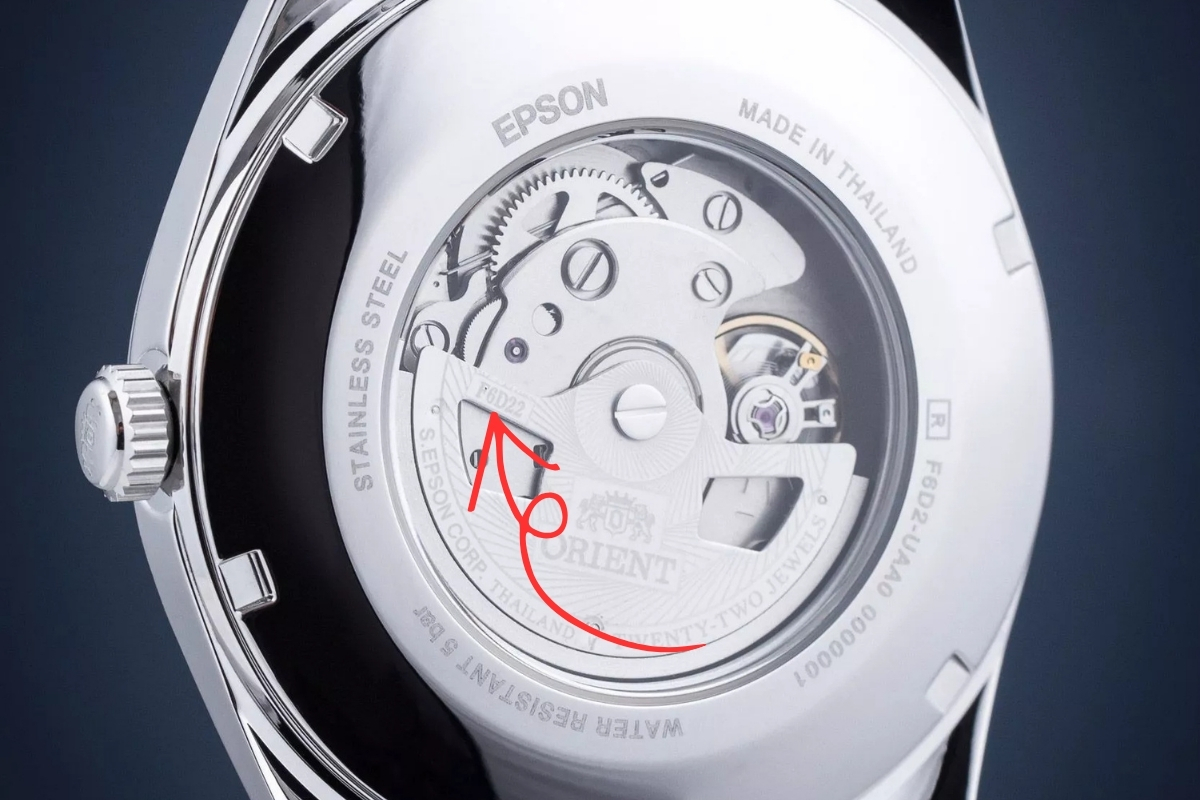
Movement calibre
On some watches, the specific calibre of the movement can be indicated on the caseback. This is more precise than the generic "Automatic" or "Quartz" that is sometimes placed on the dial. The calibre is a designation given by the movement manufacturer and defines the specific construction - its technical parameters, layout of functions or solutions used.
On the front of the watch, we usually only see general information about the type of movement. The caseback gives a more precise symbol, for example in the form of a combination of letters and numbers, which identifies the specific mechanism. For those interested in the technical specifications, this is a valuable tip - it allows them to check detailed data such as the operating frequency, the number of jewels or the power reserve.
Limited edition and special edition marking
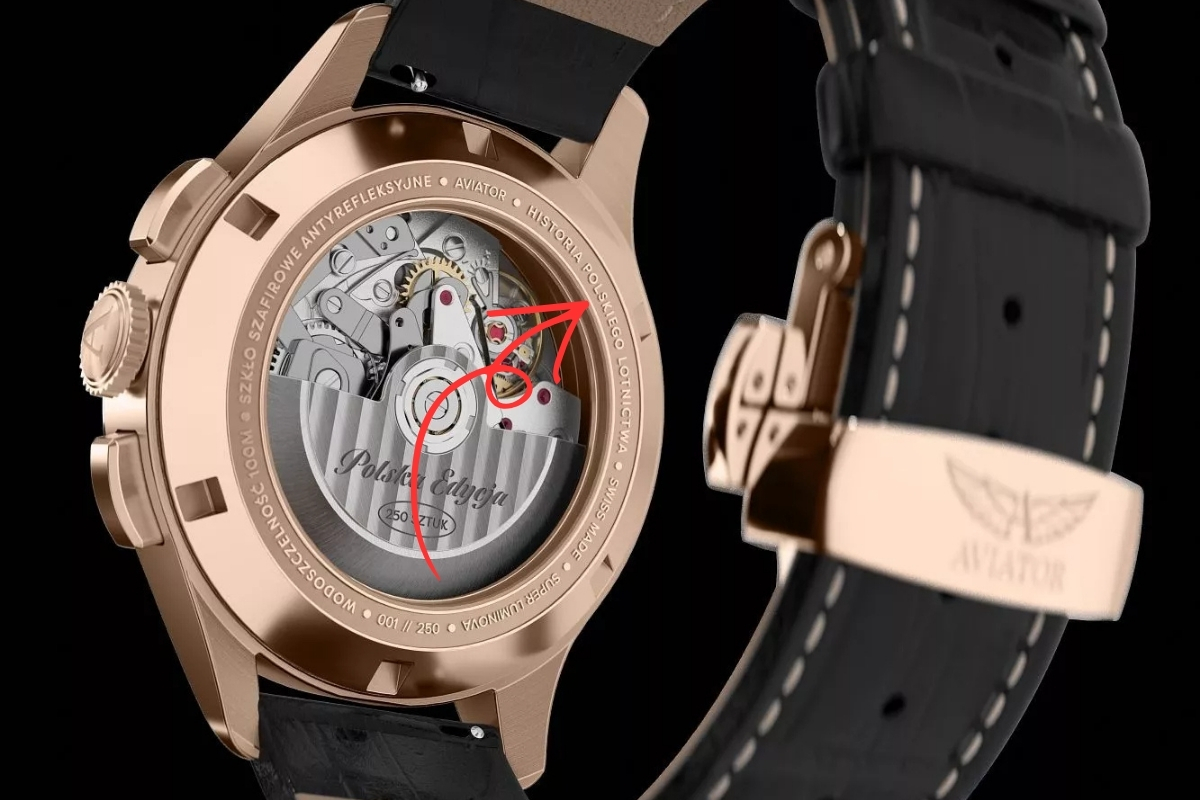
The caseback is also the place where manufacturers announce the limited nature of the watch or that it belongs to a specific edition. Limited edition watches often feature an individual piece number, written in a format such as "XXX/500", which means that the watch is one of a certain number of pieces produced.
In addition to the numbering, it is also possible to find the name of a series, an anniversary inscription, a logo of a collaboration with another brand or a reference to a specific event. Such designations have an identifying and collector's significance - they make it clear which line a particular model comes from.
Unlike technical information, which describes the parameters of the design, limit markings emphasise the context in which the watch was created. It is a detail that does not affect the performance, but for many people it is an important part of the value and history of a particular model.
How do you read the markings and why should you pay attention to them?
The markings placed on the dial, the case and the caseback are not random inscriptions, but an abbreviated form of the watch's technical specifications. They contain information about the type of movement, water resistance, material of manufacture, country of manufacture or additional functions. For those who want to consciously choose a model to suit their needs, being able to read them is of real importance.
It is worth remembering that the dial conveys the most important and visible information, while the caseback acts as a technical backdrop - it is there that the identification and construction details are found. Understanding these markings not only allows you to compare different models, but also to avoid misinterpreting parameters such as water resistance or glass type.
The more familiar we are with the meaning of the symbols and abbreviations, the easier it is to make informed purchasing decisions and take full advantage of the possibilities that a watch offers.


Sign in
I'm new here
Why is it worth having an account?
Create an account
Why is it worth having an account?
The administrator of your personal data is the owner of the Watchard store, i.e. 57 Concepts Sp. z o.o. Sp. k. with the registered office at al. Witosa 31, lok. 115, 00-710 Warsaw, Poland. Providing personal data by the Customer is voluntary but necessary to complete the purchase. You have the right to view your personal data we have processed, as well as the right to request changes or removal of your personal data. Personal data will be processed for a period of 10 years.
Forgot Password